On Compounders vs. Wealth Destroyers

It is almost a professional hazard in investment management to quote Warren Buffett. The Oracle of Omaha has been cited so often that many of his observations risk sounding cliché. Yet every so often, markets reach a point where those old lines feel newly relevant—moments when investors, collectively, begin to lose the plot again.
This may be one of those moments.
One Buffett quote in particular stands out today:
“Only when the tide goes out do you discover who’s been swimming naked.”
The reason for revisiting this line is probably obvious. We appear to be deep in another technology-driven hype cycle, where investors are increasingly complacent to risk. Nearly half of investors today appear to expect stock prices to rise in the near term, while households continue to hold an unusually high share of their portfolios in equities. Very few appear to believe the tide can turn; even though, eventually, it always does.
Another quote often attributed to Buffett (though likely paraphrased) is equally relevant:
“It’s not how hard you row, it’s the boat you’re in.”
While less famous or pithy, the idea behind this observation may be even more important today. In periods like these, investors can become consumed by trends, meme stocks, and the market’s latest obsessions. They lose interest in businesses outside of sexy themes like manufacturing GPU chips or building data centers. Yet many great businesses exist outside of fashionable trends.
This is a moment to step back from the noise and revisit a more timeless question: What makes a company “good?”
(Hint: it is not simply whether the company has exposure to AI.)
With the above in mind, today we are launching a new series built around two core themes. First, we will examine some of the strange and extreme observations present in markets today. Second, we will reconsider some enduring investment principles, which investors appear to be forgetting.
The goal of this series is straightforward: to provide readers with practical frameworks and mental anchors for making better decisions in a time of change.
We begin with perhaps the most fundamental question of all: What is the anatomy of a good wealth-generating business? How do you identify a compounder?
How to Pick Better Vehicles
To explore this question, Focus Senior Investment Strategist Kara Lilly sat down with CIO Jeff Hales to discuss the craft of selecting businesses.
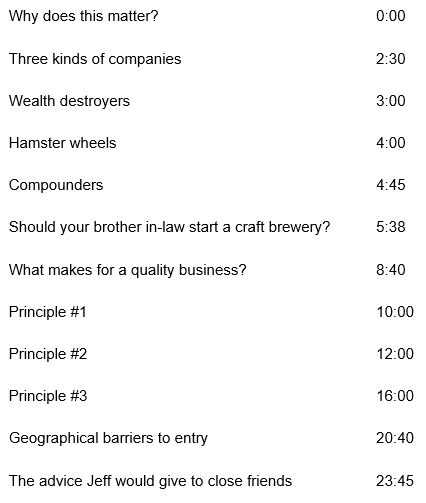
Together, they unpack the differences between compounders, hamster wheels, and wealth destroyers, drawing on lessons Jeff has learned over more than two decades in the investment business.
Whether you are evaluating an angel investment, how large publicly traded businesses might change with AI, or a private business opportunity, the ideas discussed in this conversation offer a practical framework for better decision-making and capital allocation.
Video Timing